by Kym Byrnes
Reese is buzzing with excitement because he’s just started at a new daycare, and he can’t wait to get there. While I’m trying to get myself ready for work, he sticks to me like Velcro, convinced that relentless hovering will somehow speed up our departure. His urgent whimpers clearly translate to let’s go, already.
I love that he’s enrolled in daycare, but the familiar worries creep in anyway. Will he feel abandoned at drop-off? Will he play nicely with others? Will the staff give him enough attention? Once we’re finally on the road, he chatters nonstop with anticipation. When we pull up, a cluster of his friends is already waiting outside, greeting him with wildly enthusiastic squeals.
The drop-off area is so loud I can barely hear the daycare owner as I hand him over. Within seconds, Reese is being whisked away for a quick lap around the yard before settling in for a full day of snacks, playtime, belly rubs and naps.
Reese is my very active yellow lab/golden retriever mix who used to spend a couple of days a week at the Woodbine Woof Pack dog daycare in southern Carroll County. I acknowledge he is living a lifestyle that makes my dad, who just a generation ago didn’t even allow our pets on the furniture, question my sanity.
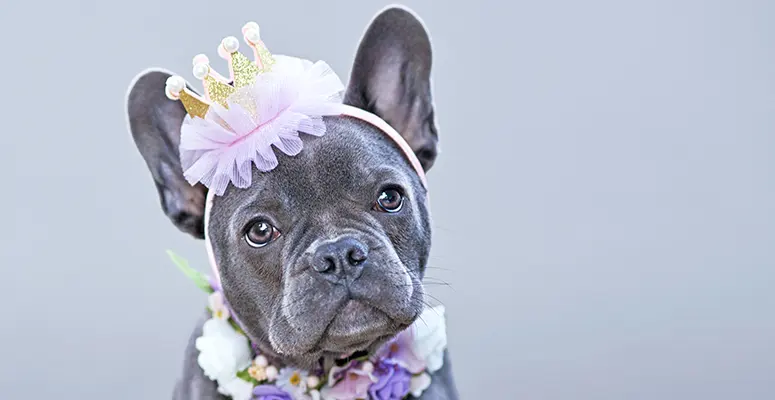
It might not be so bad if it were just daytime dog care. But, collectively, as pet owners, we’ve gone over the top in every way: mail-order services for pets, dog spas and luxury retreats, dog birthday parties, gourmet food, canine fashion lines and four-legged social media influencers.
According to the American Pet Products Association (APPA), Americans spent an estimated $157 billion on pets in 2025. Of the 94 million U.S. households with a pet, 68 million own a dog.
A few years ago, my daughter and I were wrapping up an afternoon of paddleboarding in Annapolis when we paddled straight into the most fun kind of chaos. More than a dozen dogs — every size imaginable — were buzzing around in birthday outfits and life vests. The paddleboard company was hosting a dog birthday party, complete with cake and a table full of gifts. Humans tried valiantly to impose some order on what is, by nature, a group of animals with zero interest in party etiquette.
We lingered after our boards were returned to watch a woman attempt (and fail) to coax her Great Dane onto a floating board, while seasoned retrievers hopped on with their owners like pros and paddled off. The highlight, though, was a proud black lab cruising confidently across the water with an owner giving off “this is how it’s done” vibes right up until a flock of ducks swam by. At that point, all bets were off. The dog went into the water, and the owner was paddling feverishly trying to reel her pooch back in.
So what happened over the course of a generation or two that has led us to treat pets like they are human?

According to Woodbine Woof Pack co-owner Regina Robert-Knipp, who serves anywhere from 35 to more than 50 dogs a day in daycare, doggie daycare is a mix of practical and spoiling.
“The biggest reason our pups come to daycare is for socialization. Teaching your pup to be dog-friendly makes it easier to take them places,” says Robert-Knipp, who also offers boarding services. “Other reasons include providing care when you work long hours, allowing them to have playtime with friends, and the benefits that come with having an exhausted pup in the evening so you can rest or get things done.”
Socializing a dog is one thing. But how do we explain dog yoga, gourmet dog treat bakeries, restaurants built for dogs or dog spa treatments?
In a March 2024 New York Times Magazine article, “My Goldendoodle Spent a Week at Some Luxury Dog ‘Hotels.’ I Tagged Along,” Sam Apple suggests that our devotion to dogs says as much about us as it does about them. Americans now spend roughly twice as much time with their pets as they did 20 years ago, a shift that accelerated dramatically during COVID.
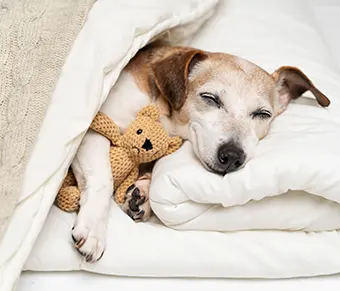 A 2023 survey found that nearly half of pet owners believe their dog knows them better than any human does, even a spouse or best friend. That statistic lands right alongside the U.S. surgeon general’s declaration of a national loneliness epidemic. Apple wonders whether our growing fixation on dogs isn’t just about humanizing them, but about seeking a kind of relationship that feels easier, safer and more predictable than human ones.
In an Esquire article, Sarah Lopez makes the case that the trend of treating dogs like full-fledged family members isn’t a phase. It’s a generational shift with staying power.
Millennials (those currently in their 20s and 30s), she notes, are increasingly opting out of parenthood and instead pouring their time, money and affection into pets, from craft dog food to birthday parties worthy of Pinterest boards. According to a Consumer Affairs survey cited by Lopez, 58% of millennials would rather have pets than children. Pets now factor into weddings, vacations, insurance plans and even funeral services, while social media has turned “fur babies” into influencers with massive followings and brand deals.
Lopez argues that for a generation shaped by Sept. 11, the Great Recession, COVID-19, climate anxiety and a general sense that the world is always one bad headline away from chaos, pets offer something deeply appealing: unconditional love, emotional grounding and stability, without the weighty fear of raising a human in a world that feels perpetually on edge.
Woodbine Woof Pack’s Robert-Knipp, who also provides pet boarding services, says that while it’s a lot of work running a business that serves the needs of humans and dogs, the joy that the pups bring to the work makes it worth it.
“Our whole team has a strong love and passion for animals, especially dogs. Our clients and friends always say this is their dream job, which makes us laugh because it is a very physical, as well as mental, business,” Robert-Knipp says. “We do get scratched, bit on occasion and knocked off our feet, but we get so much love in return. To see our pups basically burst through our front door with excitement to start their day makes all the hard work worth every minute of it.”
I know that the level of devotion I expend on Reese would have raised eyebrows a few decades ago — and maybe it is a spoiling, over-the-top way to make myself feel good at the end of a long day. But it also means more walks after work, more puppy exercise at doggy daycare and rooting hard for that Great Dane to conquer his fear of the paddleboard. If loving my dogs this much freaks out my dad a little, I can live with that — after all, the dogs are thriving, my step count is up, and it just feels good.