
by Linda L. Esterson, photography by Nikola Tzenov
The turn of the calendar to a new year often makes people think about losing weight, dieting and getting in shape. We’re bombarded with so-called assurances of a bikini body in 30 days or fad diets to help us lose 10 pounds in only a week, reinforcing societal pressures to be thin. We asked the experts about the hype, and they all agree: The best way to real health and wellness — and maybe even shed a few pounds — involves a long-term commitment to exercise.
“Lifetime fitness and wellness is a journey, not a quick, temporary fix,” explains Tara Spicer-Bartolain, a kinesiologist and lecturer at McDaniel College. “Fads or quick fixes will not help you obtain continuous long-term results, although they may help you lose some weight or see results in a short period of time. Ultimately, they are not the long-term solution.” Exercise is scientifically linked to all of the following:
- Reduced risk of chronic disease
- Improved cardiovascular health
- Decreased inflammation throughout the body
- Regulated blood sugar levels
- Improved mental well-being
- Better sleep habits
- Proper weight management
“My recommendation for working moms and dads is that, if you want to see lasting results, physical activity and exercise must be top priorities. You need to schedule time daily and be consistent,” Spicer-Bartolain says. “Find activities you enjoy, make them a habit, listen to your body, drink plenty of water and fuel your body with a healthy, well-balanced diet.”
Beyond Cardio
A focus on cardio or aerobic exercise was the basis of traditional exercise routines. Home gym equipment like treadmills, stationary bicycles and ellipticals was the rage, but today, experts say you need more from your workout.
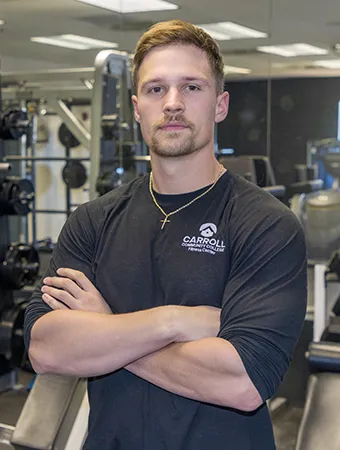
“Weight training helps you live more comfortably, [and] cardiovascular exercise helps you live longer because having a stronger heart and having the rest of your vascular system, your arteries, your veins, all of those being supple and not hardening over time from a lack of intense usage,” says Justin Mabe, assistant professor and exercise science program director for Carroll Community College.
According to organizations such as the Centers for Disease Control and Prevention (CDC) and the American College of Sports Medicine, to be healthy, adults need at least 150 minutes of moderate-intensity physical activity or 75 minutes of vigorous-intensity physical activity, plus two days of muscle-strengthening activity each week.
In general, those who want to exercise and stay fit should typically commit to three or four times a week for 20 to 40 minutes using a balanced approach of aerobic and anaerobic exercise, says Yatin Patel, an orthopedist with Carroll Health Group, a part of LifeBridge Health, in Westminster.
The balanced approach Patel suggests begins with about 20 minutes of aerobic activity, such as walking, jogging, swimming, cycling, aerobic dance, group fitness classes or kickboxing, followed by 20 minutes of muscle strengthening.

Stretching should be part of the routine before beginning any activity, and an intentional rest period should occur at the end of all exercise, Patel adds.
“As a rule of thumb, everybody should be pushing, pulling, hinging and squatting,” Mabe says. “Hinging really covers a large group of exercises, generally core. It could be like doing dead lifts or kettlebell swings. It could also be doing different kinds of crunches, reverse crunches. It doesn’t matter if you’re 80 years old or if you’re 15, if you’re doing it with correct form and correct load.”
“Lifetime fitness and wellness is a journey, not a quick, temporary fix. Fads or quick fixes will not help you obtain continuous long-term results, although they may help you lose some weight or see results in a short period of time. Ultimately, they are not the long-term solution.” — Tara Spicer-Bartolain, McDaniel College
Mabe’s colleague, Alec Cascardo, an American Council on Exercise (ACE)-certified personal trainer and fitness specialist at Carroll Community College, suggests prioritizing resistance-based exercise or progressive overload: gradually increasing the weight during a session to build strength and muscle and boost metabolism. Progressive overload also builds bone density, which Mabe notes weakens with age.
Spicer-Bartolain recommends functional fitness training most days of the week, focusing on flexibility, mobility and stability. Multi-joint exercises such as Pilates, yoga, bodyweight exercises, squats, balance training and stretching can help improve overall functional strength.
Not ‘One Size Fits All’
When it comes to exercise, however, what’s right for one person may not be right for another. Professionals urge individuals to obtain medical clearance from their primary care doctor before starting any regular exercise. Also, consulting with a trainer or physical therapist is beneficial to ensure the program is safe and appropriate for your body.
“This is not a one-size-fits-all approach,” Spicer-Bartolain says. “Developing exercise prescriptions is a very individualized journey.”
When committing to regular exercise, experts agree that activity should be varied. Participating exclusively in one activity can lead to overuse of joints, such as the shoulder or knee.

Additionally, pre-existing medical conditions can impact what exercises can be tolerated, especially in the joints, Patel says. People with diabetes, a history of osteoporosis or an arthritic knee need to consider those medical conditions when deciding to exercise regularly.
External factors like smoking can also impact the ability to exercise. Smokers have a higher risk of having degenerative tissue because of the effect of nicotine on circulation and blood supply, Patel says.
Age Appropriateness
Exercise routines should also take a person’s age into account, as tissue degeneration occurs naturally over time. Returning to a sport from long ago, like basketball, or embracing a new one, like pickleball, can lead to an acute injury or joint issues from overuse, especially if you’re playing on consecutive days or not alternating play with other types of exercise.
Patel explains, “You have to respect the biology of these tissues. When you get to the 60s and above and the 70s … about 70% of individuals have a rotator cuff tear. It’s just a natural progression. There are potentials that can happen [like surgery] if you’re not smart about how you approach exercise, especially when you’re in your 60s and 70s.”
Individuals ages 20 to 30 can exercise for a longer duration — three to four times a week — Patel says. But in the 40s and 50s, and beyond, the timing and type of exercise should be adjusted. For older adults, the focus should be on balance and mobility. Aerobic exercise should include riding a stationary bicycle, brisk walking, jogging, running or swimming.
When it comes to strength training, people need to be careful and opt for lighter weights and more repetitions, hitting different body parts throughout the week.
“This is when the orthopedic injuries start to kind of manifest, your weekend warrior recreational injuries or even just the overuse injuries, whether it be the shoulder and the rotator cuff or tendonitis in your knee or the Achilles, which tend to be very common in someone in their 40s and 50s,” Patel explains. Patel encourages people as they age — even into the late 70s, 80s and 90s — to remain mobile.
Working Out With Technology
Recognizing the various apps and videos available, Patel acknowledges they make it easy for people to commit to a regular regimen. But it’s essential to know the credentials of the providers featured in the videos or the creators of the apps. Using Apple Fitness, Peloton, Nike Training Club or a program created by a physical therapist or licensed trainer is safer than following a random app or a YouTube or social media video, Patel says.
Organizations like the AARP and YMCA also offer online workout videos. Platforms like Fitbit, Apple Health and MyFitnessPal enable logging of activity and calories to help track progress for those with specific goals or who need accountability.
“Having a goal and then prioritizing it and then being consistent with actually completing the goal is really what everyone needs to do,” he says.