edited by Shannon Rogers
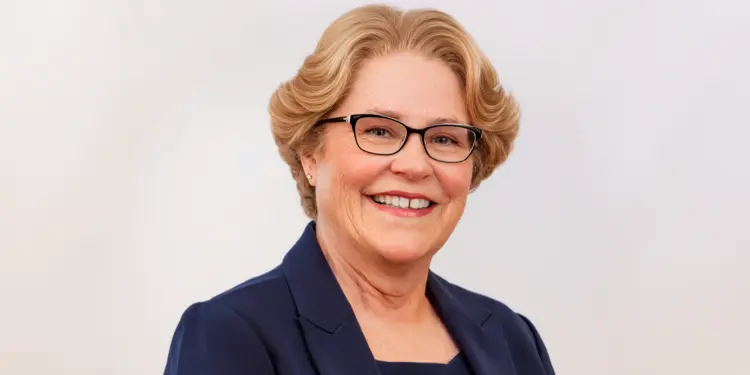
Sallie B. Taylor officially filed to run for Delegate, citing deep concern about the direction of the state she has called home her entire life.

The announcement came after more than a year of community outreach, during which Taylor said she knocked on doors, attended local meetings, and consulted with leaders across the region.
“What I hear over and over again is that Maryland is moving in the wrong direction,” Taylor said. Families, friends, and neighbors are leaving — some in search of a lower cost of living, others drawn to states where individual freedoms and business-friendly policies offer greater opportunity.
Taylor expressed particular concern about the departure of younger residents, warning that Maryland is losing the very generation that should be building careers and raising families within its borders. She also pointed to a troubling pattern in the business community: companies founded and nurtured in Maryland routinely relocate once they reach a certain level of success.
Despite acknowledging that she, too, could leave — her children are grown, she is retired, and more of her family now lives outside Maryland than in it — Taylor said she has no intention of going anywhere. “I don’t want to leave Maryland. This is my home,” she said. Her professional career has spanned positions at the U.S. Department of Labor, the U.S. House of Representatives, and the Maryland House of Delegates, experience she says has prepared her well for the work ahead.
Taylor described her campaign not merely as a bid for office but as a mission rooted in love for the state. She criticized Governor Wes Moore and Annapolis Democrats for what she characterized as a focus on a national progressive agenda at the expense of core governing responsibilities — maintaining roads, ensuring reliable water and energy systems, supporting county public safety personnel, and providing a reasonable safety net for those in need. “Their agenda removes the traditional zoning authority that allows communities to have meaningful input,” she says.
Among her sharpest criticisms is what she sees as the systematic erosion of local control. Taylor argued that state leaders are stripping local governments of authority over land use, neighborhoods, and schools. She cited the expansion of utility-scale solar facilities and transmission line projects — infrastructure she says benefits neighboring states more than Maryland — as examples of corporate interests overriding community input and displacing productive farmland and forests.
She leveled similar criticism at state housing policies, arguing that efforts to override local zoning under the banner of “affordable housing” are bypassing important community standards such as minimum lot sizes and neighborhood design requirements. Taylor also took aim at the Blueprint for Maryland’s Future, a multibillion-dollar statewide education initiative she described as a centralized scheme that drains the state budget while diminishing the authority of parents and local school boards.

On the economy, Taylor called for lower taxes, reduced regulatory burdens on businesses, and investment in reliable, affordable energy production — all of which she argued are prerequisites for keeping Marylanders of every generation rooted in the state.
“Maryland deserves better,” Taylor said. “I ask for your vote so that I can work to put citizens back in control of their government — and yes, bring our friends and family home.”