by Linda l. Esterson, photography by Nikola Tzenov
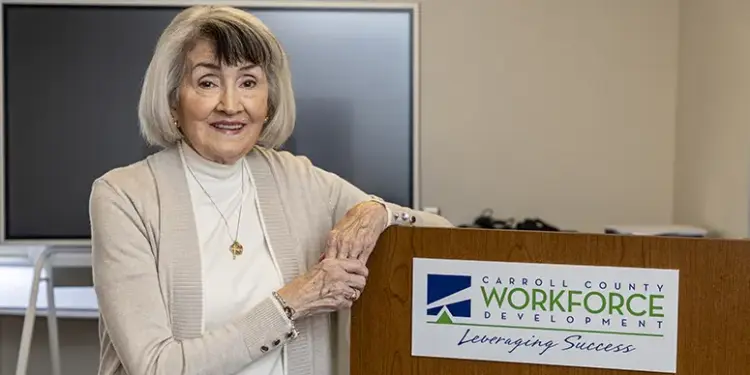
Sandy Miller recently retired for the second time. Four years ago, she was “retired” by her previous employer, receiving a severance package, and she collected Social Security and unemployment.
Yet she needed to return to the workforce as her husband was unable to work, and the family’s financial responsibilities were on her shoulders.

As she sought employment, Miller connected with the team at Carroll County Workforce Development (CCWD), an office of the Carroll County Department of Economic Development dedicated to employment, training and workforce development.
She collected unemployment for 12 months while she searched for another position, but then the tide turned. She was offered and accepted a four-year, grant-funded contract to serve as a business consultant for the organization, helping others find employment. She met many people looking for work due to funding cuts, rising expenses and position eliminations.
“If you peel away the onion and you look at why retirees are coming back into the job market, it’s all about the Benjamins,” Miller explains. “They don’t have enough money to put food on the table and pay the rent, gas and electric bill.”
Traditionally, people could retire at 65, with a pension and a retirement plan in the bank supplementing Social Security payments. Today’s seniors, who may have retired when they came of age and received lower Social Security payments, don’t have a pension to supplement their income and need a job to make up for that loss.
“It’s a vicious circle, and it’s all about money,” Miller says.
“If you peel away the onion and you look at why retirees are coming back into the job market, it’s all about the Benjamins. They don’t have enough money to put food on the table and pay the rent, gas and electric bill.” — Sandy Miller, Carroll County Workforce Development
After the recent federal government cuts, she’s again without a job and remains the sole provider of her household after her husband passed away last year.
Miller is one of many seniors in the county — and around the country — who return to work after retiring. According to an AARP study conducted from August 2025 to February 2026, 7% of retirees have returned to the labor force. Forty-eight percent of those “unretirees” said their primary reason is to make money.

“It’s just kind of what’s happening,” explains Scott Singleton, a business consultant with CCWD. “The world today is dictating that the money coming in isn’t enough, and [they] need to find a way to bring in some extra money.”
A Sense of Purpose
In addition to finances, 14% of the AARP-surveyed seniors cited the desire to stay active as a reason to return to work.
According to AARP, older adults commonly work in health care, professional services and retail stores in roles such as home health, customer service and bookkeeping. Many older workers also pursue self-employment or gig-economy jobs, such as consulting and tutoring. The jobs offer flexibility, purpose and the chance to leverage lifelong skills.
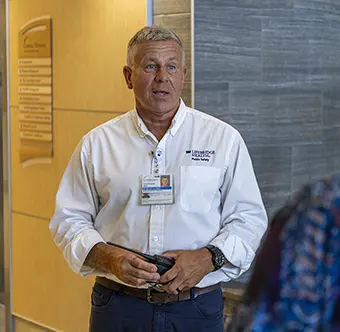
Ernie Long retired after a 35-year career. He spent some time at his coastal home in Selbyville, Delaware.
“I lasted six months, and I was bored to death,” says the former firefighter, now 68. “I’m a type-A personality, so I like to constantly be busy.”
He also missed the camaraderie of being part of a team. On the recommendation of a former lieutenant, he applied to join the security team at Carroll Hospital on a part-time basis. After a year, he took a full-time day-shift position, and four years ago, he accepted the role of manager.
At the same time, his children started having children of their own, and the desire to live by the sea waned.
Our goal of moving to the beach and totally retiring kind of went by the wayside because we wanted to be close to them,” he says. “Having extra money makes things a little bit easier, and I can help my kids.”
Long estimates he’s one of more than 15 members of the hospital security team who are former firefighters, police officers or EMTs who have come out of retirement to return to work. While he’s no longer climbing ladders or running on adrenaline to fight fires or perform rescues, he’s still dealing with emergencies, including cardiac events and answering calls.
Clinical psychotherapist Joan McInerney, LCSW-C, planned to phase out her 20-year-old Westminster practice and began training to become a volunteer Medicare counselor. She also hoped to donate time to a few community organizations.
McInerney closed her practice on Nov. 1, 2019, and three months later, the world shut down.
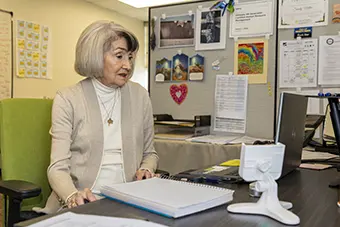
“I had no work, and I’m the type of person who craves routine, structure and purpose,” she says. Her children challenged her to read 50 books. She also studied nutrition and became vegan.
In September 2020, she applied to volunteer with Access Carroll, a multidisciplinary agency serving high-risk populations. Instead, she was hired full-time. Three years later, she retired again.
But that respite didn’t last long. A year ago, a former colleague asked for assistance in starting a group practice. She agreed to help on the condition that she remain involved for only a few years. Instead of a full caseload, she’s managing care for about 15 clients and assisting with administrative functions.
“I’m very much about my physical and mental health,” says McInerney, now 68, a mother of five and a grandmother. “I work rigorously to maintain optimum health, so that I can work as long as I want, maintain my cognitive sharpness and physical activity and contribute to the community, church, kids and family.”
The Job Search After 60
As a senior, one of the most difficult challenges is finding work. Older adults are discovering the difficulty of explaining their reasons for seeking employment and sometimes face ageism in their efforts to fit in with a prospective employer.
“They’re the people who are between 60 and 70 and are competing with the people who are now between 40 and 60, who are competing with the people who are 20 to 40,” Miller says. The way to compete, Singleton says, is to stay relevant.
Technology is a major barrier. Stay abreast of and comfortable with its changing landscape, including the use of artificial intelligence (AI), by taking classes or training courses.
Tips for Self-Promotion
While AI has automated some jobs, seniors can use it to support their job searches.
Miller suggests using AI to write a resume or cover letter that does not reveal age, which often results in an “overqualified” label from prospective employers. She suggests explaining in the cover letter that “you can never be overqualified, but you can always be underqualified.” Promote transferable skills, such as critical thinking, problem-solving, teamwork and professionalism, that are just as valuable to employers as industry experience.
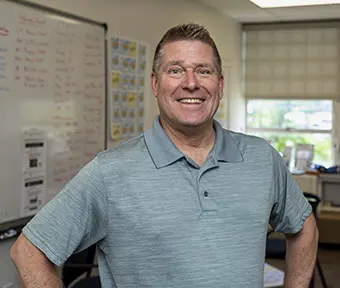
“Transferable skills mean you’re an intelligent, educated, experienced person, and you just have to change the title on your resume, but you use the same skills and the same innate intelligence to create a persona that will fit the job description,”
she says.
She also quotes a journalism industry phrase that cautions, “Don’t bury the lead.”
“If you don’t know how to catch the eye of the recruiter or the hiring manager in the first six seconds, then you won’t get an interview,” she says.
Singleton suggests seniors model the part as well. During the interview, show energy and excitement about working, and adapt your look — hair, clothing and accessories — to fit the workplace.
“Open your mind, be creative and get outside your box,” Singleton suggests. “Sometimes we miss opportunities because our eyes just aren’t open to them, because we are closed-minded. Go out there and make it happen.”