edited by Nikola Tzenov
Two years after the collapse of the Francis Scott Key Bridge, Gov. Wes Moore is emphasizing Maryland’s recovery efforts, pointing to accelerated reconstruction timelines and continued support for affected families, workers and businesses.

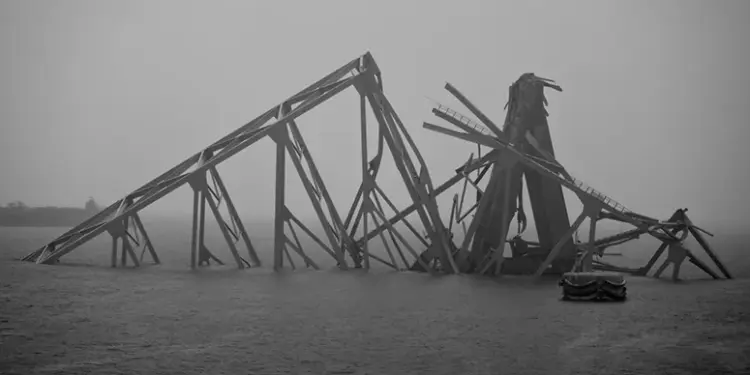
In an op-ed published this week in The Baltimore Sun, Moore reflected on the March 2024 disaster, when a cargo ship struck the nearly two-mile-long bridge, a critical link to the Port of Baltimore. The collapse killed six construction workers and disrupted one of the nation’s busiest ports.
Moore described being awakened in the early morning hours of the incident and recognizing the scale of the crisis, calling it one of the most catastrophic moments in Maryland history with national and international implications.
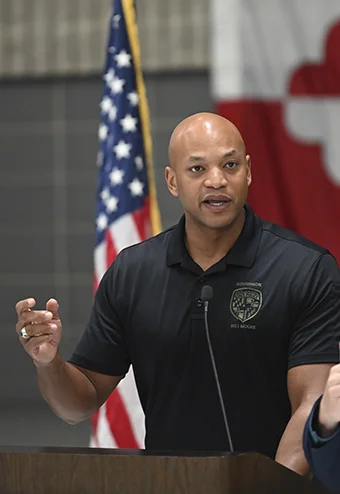
“We have shown the world what it means to be Maryland Tough and Baltimore Strong,” Moore wrote, crediting residents, first responders and community leaders for rallying in the aftermath.
The governor named the six victims — José Mynor López, Alejandro Hernandez Fuentes, Dorlian Ronial Castillo Cabrera, Maynor Yasir Suazo-Sandoval, Carlos Daniel Hernandez Estrella and Miguel Angel Luna Gonzalez — and said the anniversary serves as a moment to remember those lost while recommitting to recovery efforts.
State officials say more than $42 million in emergency funding has been distributed to help impacted businesses and workers, including those tied to port operations. The main shipping channel was reopened in a fraction of the projected time, helping restore commerce and limit long-term economic damage.
Moore highlighted what he described as an unusually fast pace for a major infrastructure project. Cleanup of the federal channel, initially expected to take nearly a year, was completed in about 11 weeks, while key design and permitting milestones have been reached months or years ahead of typical timelines.
The governor also pointed to coordination with federal partners, including the U.S. Department of Transportation, to secure emergency funding and accelerate environmental reviews and construction planning.

“This is the fastest-moving large infrastructure project in the United States,” Moore wrote, adding that he intends to be in office when the new bridge opens.
While the collapse occurred in Baltimore, its economic ripple effects extended across the region, including into surrounding counties such as Carroll County, Maryland, where some businesses rely on port-related supply chains and commuter routes tied to the Baltimore metro area.
Moore said the state will continue focusing on recovery and rebuilding efforts until the new bridge is complete, calling the project a test of whether large-scale infrastructure can still be delivered efficiently in the United States.
“We will continue to recover, rebuild and rise together,” he wrote.
Photo sources:
Key Bridge Collapse Site
Gov. Wes Moore